Archives
- 2026-08
- 2026-07
- 2026-06
- 2026-05
- 2026-04
- 2026-03
- 2026-02
- 2026-01
- 2025-12
- 2025-11
- 2025-10
- 2025-09
- 2025-03
- 2025-02
- 2025-01
- 2024-12
- 2024-11
- 2024-10
- 2024-09
- 2024-08
- 2024-07
- 2024-06
- 2024-05
- 2024-04
- 2024-03
- 2024-02
- 2024-01
- 2023-12
- 2023-11
- 2023-10
- 2023-09
- 2023-08
- 2023-07
- 2023-06
- 2023-05
- 2023-04
- 2023-03
- 2023-02
- 2023-01
- 2022-12
- 2022-11
- 2022-10
- 2022-09
- 2022-08
- 2022-07
- 2022-06
- 2022-05
- 2022-04
- 2022-03
- 2022-02
- 2022-01
- 2021-12
- 2021-11
- 2021-10
- 2021-09
- 2021-08
- 2021-07
- 2021-06
- 2021-05
- 2021-04
- 2021-03
- 2021-02
- 2021-01
- 2020-12
- 2020-11
- 2020-10
- 2020-09
- 2020-08
- 2020-07
- 2020-06
- 2020-05
- 2020-04
- 2020-03
- 2020-02
- 2020-01
- 2019-12
- 2019-11
- 2019-10
- 2019-09
- 2019-08
- 2019-07
- 2019-06
- 2019-05
- 2019-04
- 2018-11
- 2018-10
- 2018-07
-
br Materials and methods E coli
2021-12-17
Materials and methods E. coli strains. Strains of E. coli with mutations in the lacZ gene for β-galactosidase [5] and a derivative with a knock-out mutation of the chromosomal gene for FPG produced with P1vir [6] were obtained from H. Schellhorn (McMaster Univ., Hamilton, Ontario, Canada). Growth
-
br A myriad of receptors in WM To complicate the
2021-12-17

A myriad of receptors in WM To complicate the picture, WM glia express numerous non-glutamatergic neurotransmitter receptors, a fact that is often underappreciated when considering pathophysiology. When examined in isolated optic nerve, a central WM tract completely devoid of neuronal synapses, r
-
Acknowledgments br Introduction Type diabetes mellitus T DM
2021-12-17
Acknowledgments Introduction Type 2 diabetes mellitus (T2DM) is caused by relative insulin deficiency or insulin resistance in peripheral tissues. The clinical management of T2DM is achieved by controlling blood glucose levels. Current therapies available for treatment of T2DM include biguanides
-
br Genetic manipulation variation of
2021-12-17
Genetic manipulation/variation of the ghrelin system and alcohol-related outcomes Genetic manipulation of the ghrelin system (either the peptide or the receptor gene) via knockout rodent models has provided further insight into the role of this system in alcohol seeking and consummatory behaviors
-
Clindamycin HCl synthesis Receptor tyrosine kinases RTKs con
2021-12-16
Receptor tyrosine kinases (RTKs) consist of 20 subfamilies in humans, all of which share a common structure consisting of extracellular ligand-binding region, a single-pass transmembrane domain and an intracellular tyrosine kinase domain [2]. Binding of a growth factor to the ligand-binding domain r
-
The IN gene of the
2021-12-16
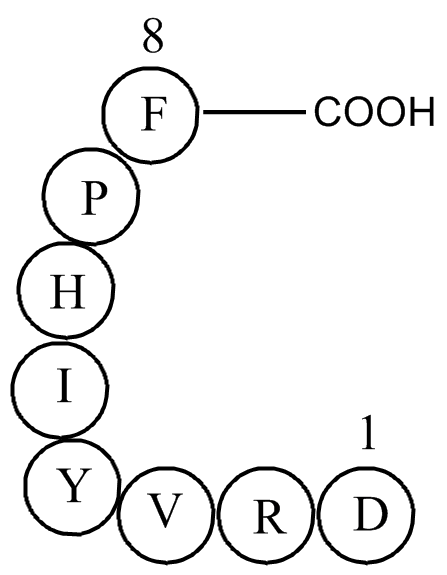
The IN gene of the HIV isolate from Papua (CRF01_AE isolate) contains genetic polymorphisms (Fig. 1A) that encode for variant amino acids in the IN protein, based on the Stanford HIVdb mutation interpretation database (Fig. 1B). These variations slightly changed the three-dimensional structure of IN
-
The finding that a peptide consisting of d amino
2021-12-16
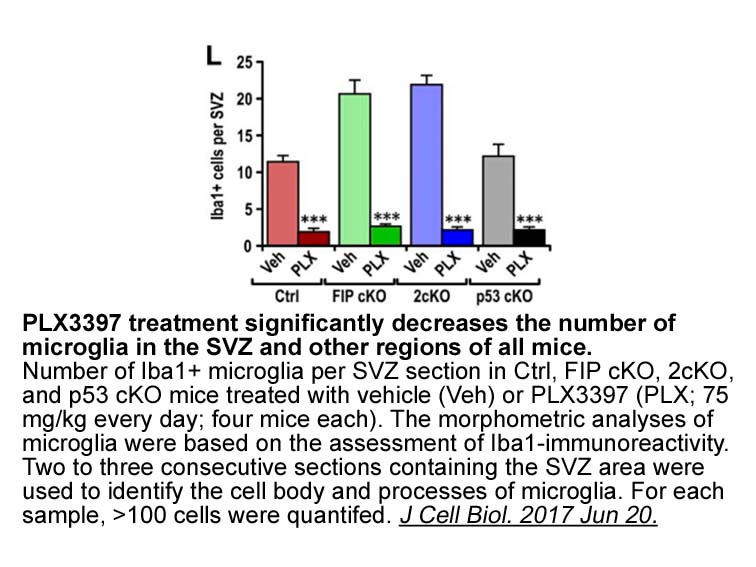
The finding that a peptide consisting of d-amino acids binds to LSD1-CoREST1 with equal affinity as the l-amino GS-9973 ligand indicates that the assays detect a generally non-specific association between two highly charged molecules. Nonetheless, p53-CTD is an effective inhibitor of LSD1 and its bi
-
br Conclusion The following is the supplementary data relate
2021-12-16

Conclusion The following is the supplementary data related to this article. Conflict of interest Author contributions Heart transplantation is the most important treatment for end-stage heart failure. Ischemia/reperfusion injury is a common condition during transplantation surgery and is
-
It is becoming increasingly apparent that membrane lipids
2021-12-16
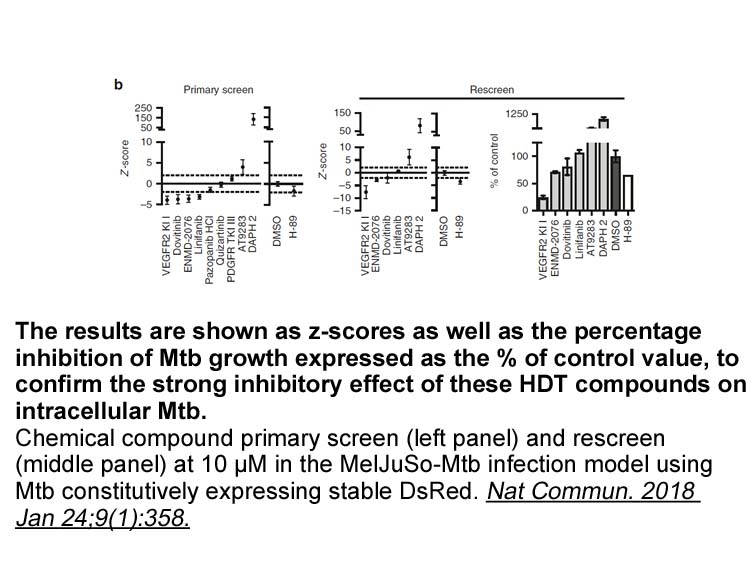
It is becoming increasingly apparent that membrane lipids play a critical role in modulating and regulating protein function. For example, embedding the homologous SLC1 transporter GltPh in a POPE bilayer allowed a third Na+ binding site to be identified from MD simulations [42], and the binding ene
-
While TUNEL staining is traditionally thought to be
2021-12-16
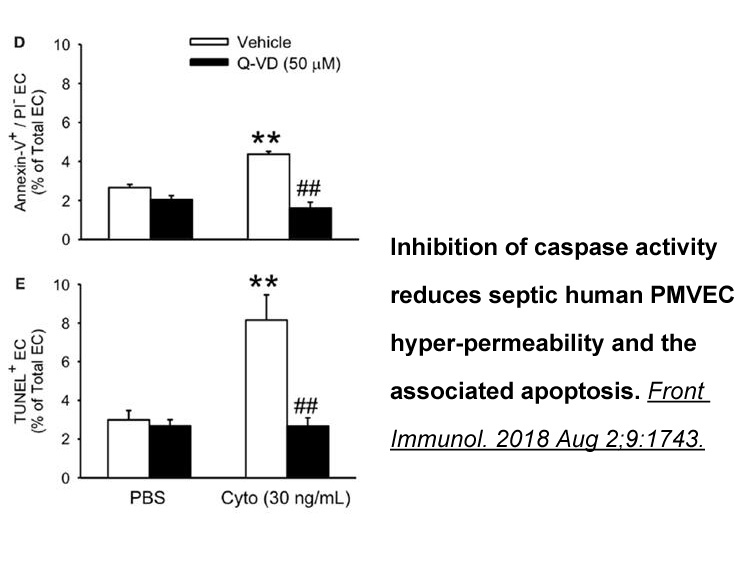
While TUNEL staining is traditionally thought to be an apoptosis marker, studies have shown that TUNEL can stain necrotic AR-42 HDAC mg [19], [20], [21]. Furthermore, DNA degradation has also been observed in necrotic cells [22]. TUNEL staining alone is therefore insufficient to distinguish apoptos
-
Acknowledgments br Introduction Type diabetes mellitus
2021-12-16
Acknowledgments Introduction Type 2 diabetes mellitus (T2DM) is caused by relative insulin deficiency or insulin resistance in peripheral tissues. The clinical management of T2DM is achieved by controlling blood glucose levels. Current therapies available for treatment of T2DM include biguanides
-
br Materials and methods br Results
2021-12-16
Materials and methods Results Discussion Defective regulation and inappropriate activation of the HH signaling pathway is implicated in many cancers. SMO targeting inhibitors were the first to enter clinical trials, however complications with acquired resistance and toxicity, also exemplifi
-
While ghrelin s role in addictive behaviors has been
2021-12-16
While ghrelin's role in addictive behaviors has been most extensively explored with alcohol, ghrelin has also been implicated in biobehavioral substrates of other drugs of abuse. For example, preclinical experiments suggest that GHS-R1a blockade may improve nicotine [155,156], opioids [[157], [158],
-
br Acknowledgements br Introduction Muscle FBPase is very se
2021-12-15
Acknowledgements Introduction Muscle FBPase is very sensitive to AMP inhibition and in the presence of physiological concentrations of this effector in muscle fibres FBPase should be almost completely inactive [1], [2]. Recently, we have presented evidence that, in vitro, muscle aldolase binds
-
The membrane metalloendopeptidase MME gene is located at hum
2021-12-15
The membrane metalloendopeptidase (MME) gene is located at human chromosome 3q21-27. It encodes a 100-kD type II transmembrane glycoprotein, a widely expressed membrane metalloendopeptidase that degrades a number of substrates. The active site of the enzyme faces the extracellular space. MME is wide
16655 records 563/1111 page Previous Next First page 上5页 561562563564565 下5页 Last page